🧭 Overview
Norway is a Scandinavian kingdom known for fjords, mountains, Northern Lights, midnight sun, oil wealth (sovereign wealth fund worth $1.6 trillion), and Viking heritage. Oslo is the capital; Bergen is fjord gateway; Tromsø is Arctic city. The constitutional monarchy offers world-class quality of life funded by oil/gas revenues. Economy is petroleum, fishing, shipping, and hydropower. Norway (not EU member but EEA) offers safety, nature, wealth, and work-life balance. However, astronomical costs (world's most expensive), darkness/cold winters, reserved culture, and high taxes create challenges. It's rich, beautiful, cold, expensive.
👥 People & vibe
With roughly 5.5 million people, Norway is ethnically Norwegian (~83%) with immigrant communities (Polish, Swedish, Somali, others) and indigenous Sámi (north). Norwegian is language; English proficiency is excellent (90%+). The culture emphasizes egalitarianism, nature (friluftsliv — outdoor life), independence, and reserved politeness. Norwegians are friendly but distant, punctual, and private. The vibe is organized, wealthy, and outdoorsy. Oslo is modern capital; Bergen is rainy charm; Tromsø is Arctic frontier; rural areas are sparse. Janteloven (Law of Jante — don't think you're special) shapes modesty culture.
🌦️ Climate & landscape
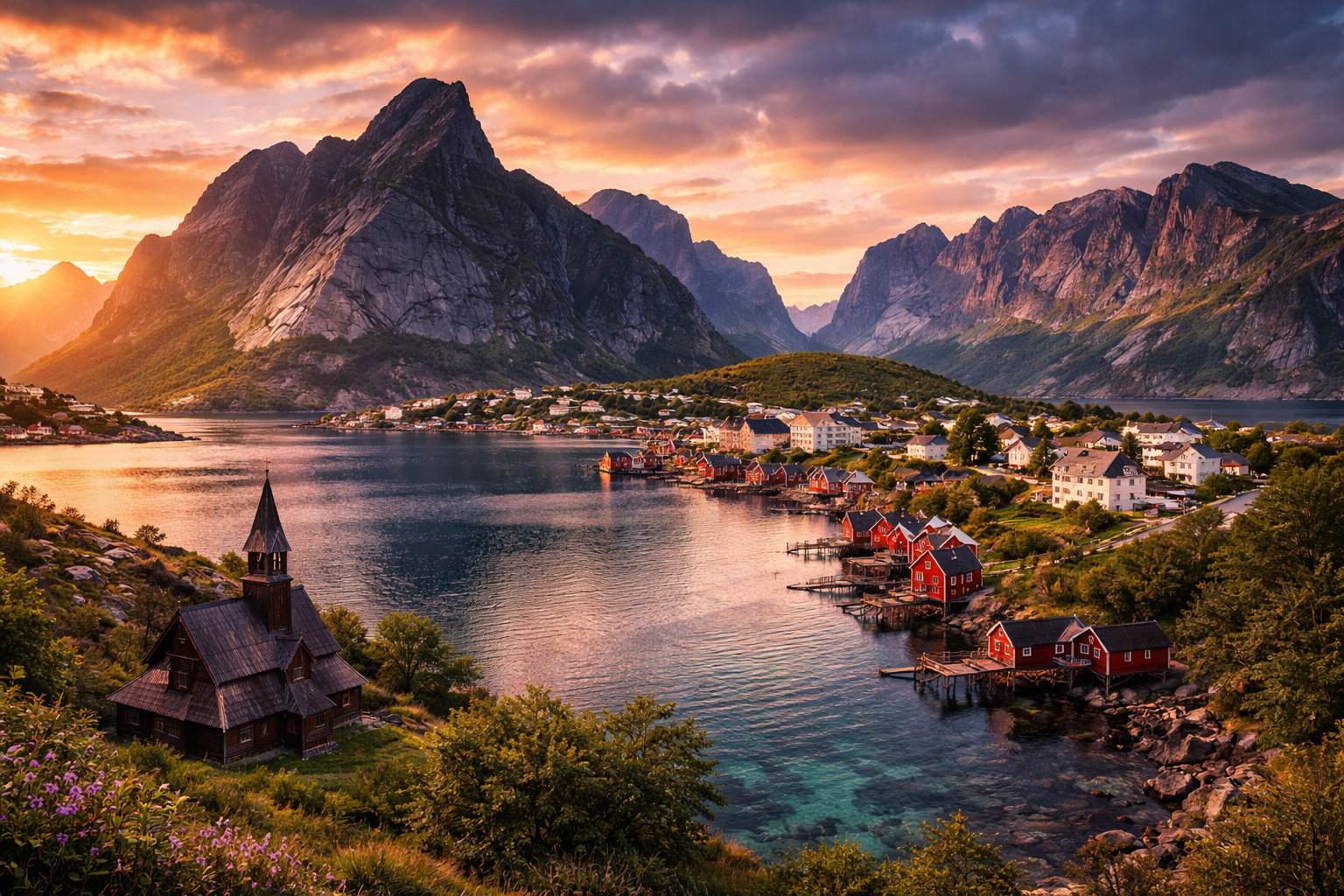
Expect varied climate: coastal areas have mild winters (Gulf Stream), inland/north have harsh winters (-20°C+), short summers (15-25°C). Polar night (Nov-Jan, north) means no sun; midnight sun (May-July) means no darkness. The landscape is fjords (UNESCO-listed Geirangerfjord, Nærøyfjord), mountains, glaciers, Northern Lights (Aurora Borealis), Arctic tundra, and coastal islands. Natural beauty is spectacular and raw. Darkness affects mental health.
🏠 Housing & settling in
Oslo has housing shortage. Rents: NOK 12,000-25,000/month ($1,100-2,300). Expect 3 months deposit and competition. Popular areas: Grünerløkka, Majorstuen, Frogner. Quality is excellent — well-insulated, heated, modern. Outside Oslo, Bergen, Stavanger, Trondheim are options. Buying requires massive capital (NOK 4-8M+, $370-740k+). Registration is mandatory. Heating is essential but efficient. Nature is accessible everywhere.
💼 Work & economy
The economy is petroleum (sovereign wealth fund invests oil revenues), shipping, fishing, hydropower, and technology. For EEA citizens, free movement applies. Non-EEA need work permits (skilled worker visa) requiring job offer and salary threshold (NOK 450k+/year). Opportunities exist in oil/gas, tech, healthcare (nursing shortage), or engineering. Salaries are high (NOK 500k-900k/year, $46-82k) but taxes are 30-47% and costs match. Work-life balance is sacred — 37.5hr weeks, 5 weeks vacation, parental leave is generous. Norwegian language helps integration but English works in many sectors.
🛂 Visa & entry
EEA/Swiss citizens have free movement rights. Non-EEA can visit Schengen zone 90 days in 180 days. For longer stays, skilled worker visa, family reunification, or student visa required. The process is digital and efficient. Permanent residence requires 3 years continuous residence. Citizenship requires 7 years residence (cumulative), Norwegian language proficiency (B1 oral, A2 written), and passing civic test. Dual citizenship allowed (since 2020).
🏥 Healthcare
Healthcare is universal and tax-funded. Quality is excellent — modern facilities, well-trained doctors, preventive care focus. GP is gatekeeper. Wait times for specialists can be months. Life expectancy is ~83 years. Prescription drugs are subsidized after deductible. Dental is partially covered. Mental health services are available (needed given darkness). EU citizens use EHIC. System is efficient and comprehensive.
🚗 Transport & mobility
Oslo has metro, trams, buses — clean, punctual, efficient. Most people use public transport or cycle. Cars are expensive (high taxes) but EVs are heavily subsidized (Tesla popularity). Roads are excellent but mountain passes require winter tires. Trains connect cities. The country is long — Oslo to Tromsø is 1,700km (flights essential for north). Bergen Railway is scenic. Ferries connect fjord communities. Domestic flights common. Oslo and Bergen airports are main hubs.
🍛 Food note (national dish)
There's no single national dish but Brunost
(brown cheese), Rakfisk
(fermented fish), or Fårikål
(mutton stew with cabbage) represent Norwegian cuisine. Lutefisk
(lye-treated dried fish) is controversial traditional dish. Modern Norwegian cuisine is New Nordic movement — seasonal, local, seafood-focused. Salmon is iconic. Food is expensive.
🔎 Bottom line
Norway excels for nature lovers, outdoor enthusiasts, families (excellent childcare, education), and those prioritizing quality of life and work-life balance. Pros: stunning nature (fjords, Northern Lights), safety, wealth (oil fund), work-life balance, English proficiency, excellent services. Cons: astronomical costs (most expensive country), darkness/cold winters (polar night is brutal), reserved culture (hard to make Norwegian friends), and high taxes. Oslo is expensive but livable; Bergen is rainy but charming; north is Arctic adventure. Best for those with high-paying jobs who can afford costs and handle darkness. If you love nature, don't need sunshine year-round, and can pay $8 for beer, Norway delivers unmatched quality of life. Sovereign wealth fund means excellent public services.
Expat Score — 8.0 / 10